
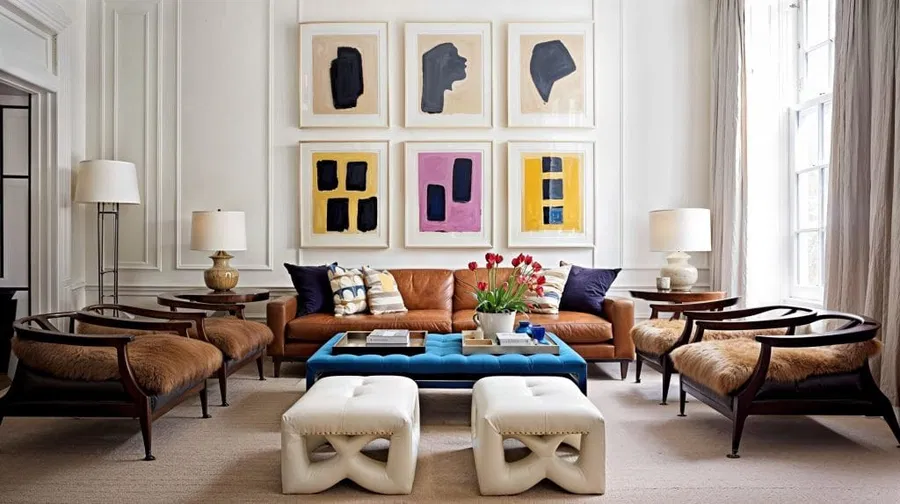

Interior design is frequently understood through the tangible components of a room: architectural layouts, flooring choices, paint swatches, and functional furniture. While these foundational elements establish structure, comfort, and utility, a space fully furnished with showroom pieces can still feel sterile, detached, and unfinished. Without an emotional anchor, a house remains a curated collection of objects rather than a home.
Artwork serves as the essential bridge between structural design and human emotion. It introduces narrative depth, establishes focal points, dictates color harmony, and communicates personal identity in ways that standard furnishings cannot replicate. By integrating artwork intentionally, you transform static architectural spaces into dynamic, visually rich environments that reflect your experiences, values, and creative sensibilities.
Establishing Dynamic Focal Points and Visual Hierarchy
Every well-designed interior requires a clear visual hierarchy. Without a deliberate focal point to capture the eye, a room can feel chaotic or visually flat. A strong central anchor gives the brain an immediate point of orientation, organizing how the surrounding furniture, architectural angles, and decorative details are perceived.
Artwork provides one of the most effective tools for establishing this focal hierarchy:
-
Oversized Statement Canvases: A single large-scale painting positioned above a living room sofa, fireplace mantel, or bed headboard commands immediate attention and defines the primary purpose of the room.
-
Curated Gallery Arrangements: Grouping diverse framed prints, original sketches, and mixed-media works along a hallway or staircase creates a rhythmic visual pathway that encourages movement through the home.
-
Three-Dimensional Sculptural Elements: Wall reliefs, ceramic installations, and freestanding sculptures break up flat two-dimensional drywall, introducing physical depth and captivating shadow play.
-
Architectural Alignment: Art placed at the terminus of a long corridor or centered within an arched niche draws the eye forward, making compact spaces feel deeper and intentional.
When selecting a focal piece, scale is critical. Artwork that is too small gets lost on expansive walls, while oversized pieces in cramped spaces create visual friction. A reliable design principle is to choose a piece or grouping that spans approximately two-thirds to three-quarters the width of the furniture piece anchored beneath it.
Directing Color Palettes and Textural Depth
Finding the ideal color palette for an interior space can be challenging. Many homeowners struggle to balance bold accent tones with calm foundational neutrals. Rather than guessing which paint swatches and upholstery fabrics complement one another, designers often use a key piece of artwork as the foundational color blueprint for the entire room.
Artwork enhances environmental color and physical texture through several strategic approaches:
-
Extracting Harmonious Accent Tones: A painting containing subtle flecks of ochre, cobalt, or forest green offers a natural guide for choosing throw pillows, accent rugs, drapery, and ceramic accessories.
-
Softening Monochromatic Schemes: In contemporary rooms dominated by neutral shades like gray, white, or beige, a vibrant abstract canvas injects vital warmth and visual energy without disrupting the minimalist aesthetic.
-
Layering Tactile Surfaces: Heavy impasto oil paintings, woven fiber tapestries, bas-relief plaster panels, and carved wood assemblages introduce tactile variety that contrasts with smooth drywall, glass tabletops, and polished metal fixtures.
-
Diffusing and Reflecting Light: Glossy oil varnishes, metallic leaf accents, and framed glass glazes catch natural daylight, shifting the ambient mood of the room as the sun moves across the sky.
By drawing color inspiration directly from artwork, the finished room feels cohesive and deliberately composed rather than haphazardly assembled.
Communicating Individual Identity and Emotional Narrative
Mass-produced furniture catalogs offer sleek silhouettes and functional utility, but they cannot tell your personal story. Artwork serves as the voice of an interior, offering guests an authentic glimpse into your travels, passions, heritage, and creative perspective.
The artwork you select functions as a powerful tool for self-expression:
-
Original Art and Artisan Works: Investing in unique pieces by independent artists brings authenticity and craftsmanship into your space, ensuring your decor is entirely one-of-a-kind.
-
Documentary and Travel Photography: Framing high-quality personal photographs from meaningful journeys or milestone experiences sparks daily memories and serves as an organic conversation starter for visitors.
-
Heirloom and Vintage Pieces: Integrating antique landscape paintings, ancestral portraits, or vintage exhibition posters bridges the gap between historical eras, giving a room a timeless, collected-over-time character.
-
Subject Matter Resonance: Whether you are drawn to the serenity of misty coastal landscapes, the raw energy of urban street art, or the intellectual challenge of geometric abstraction, your choices project your inner mindset onto your physical environment.
Surrounding yourself with art that triggers positive emotional responses actively supports well-being, turning your home into a restorative sanctuary tailored to your temperament.
Balancing Spatial Proportions and Perceived Scale
Beyond its aesthetic and emotional contributions, artwork acts as an optical modifier that can visually alter the perceived dimensions of an interior space. Strategic placement and thoughtful framing techniques can make modest rooms feel expansive and tall, cavernous rooms feel intimate and cozy.
Optical strategies for modifying spatial proportions include:
-
Vertical Art Placement for Low Ceilings: Hanging tall, slender vertical portraits or stacking a pair of complementary frames vertically draws the eye upward, creating the illusion of greater ceiling height.
-
Horizontal Art for Expanding Narrow Rooms: Broad panoramic landscapes or wide abstract triptychs stretch the visual plane horizontally, making narrow dining rooms, galley kitchens, or tight hallways feel wider.
-
Floating Minimalist Frames for Small Spaces: Light wood frames with wide white mat boards give art room to breathe, reflecting ambient light and preventing small entryways or powder rooms from feeling claustrophobic.
-
Subdividing Open-Concept Layouts: In modern open-concept floor plans, distinct art groupings can delineate functional zones, such as framing the dining space with culinary still-lifes while anchoring the living area with expansive abstracts.
Leveraging artwork as an architectural tool allows you to correct layout flaws without costly structural renovations.
Professional Framing and Illumination Techniques
The aesthetic impact of an artwork is profoundly influenced by how it is framed and illuminated. Poor framing choices can cheapen exceptional art, while inadequate lighting hides fine brushwork and rich pigment undertones.
To elevate and protect your art collection:
-
Invest in Custom Archival Matting: Acid-free cotton mats prevent paper degradation and yellowing over time while creating a visual buffer between the artwork and the frame profile.
-
Select Non-Glare, Conservation-Grade Glass: Museum glass blocks harmful ultraviolet rays that cause colors to fade while eliminating distracting room reflections.
-
Use Dedicated Picture Lights: Installing warm, low-voltage LED picture lights above frames or angling ceiling-mounted spotlights at a thirty-degree angle illuminates brushwork evenly without casting shadows or causing thermal damage.
-
Maintain Universal Eye-Level Hanging: The golden rule of gallery curation is to align the center point of the artwork fifty-seven to sixty inches above the finished floor, matching the average human eye level.
Treating framing and lighting as integral components of your interior design ensures that each piece performs at its highest visual potential.
Frequently Asked Questions
How high should artwork be hung above a living room sofa or console table?
The bottom edge of the frame should typically hang four to eight inches above the top of the sofa back or tabletop. This spacing ensures the artwork feels visually connected to the furniture below rather than floating disconnectedly on the wall, while preventing guests from bumping their heads when leaning back.
Is it acceptable to combine contrasting art styles like classical oil portraits and modern abstract prints in the same room?
Yes, mixing disparate art styles creates a sophisticated, eclectic aesthetic that feels curated over time rather than purchased all at once. To maintain harmony between contrasting genres, unify the collection through consistent framing finishes, matching mat board widths, or a shared underlying color temperature across the pieces.
How does improper room lighting degrade valuable artwork over time?
Direct sunlight and high-output halogen bulbs emit high levels of ultraviolet radiation and infrared heat. These light waves break down organic chemical binders in paint, cause paper fibers to become brittle and yellow, and bleach vibrant pigments, causing irreversible fading. Always position fine art away from direct sunbeams and use ultraviolet-filtering glazing paired with cool light emitting diode fixtures.
What is the best approach to choosing art for high-humidity areas like bathrooms and kitchens?
Moisture, steam, and airborne cooking oils can quickly warp stretched canvas and buckle unsealed paper. In bathrooms and kitchens, opt for sealed metal prints, ceramic wall installations, sculptures made from treated stone or resin, or inexpensive prints sealed tightly inside moisture-resistant frames equipped with airtight silicone gaskets.
How do you determine the correct mat board width when framing smaller prints for large walls?
Using an exaggerated, wide mat board of four to six inches around a modest four-by-six or five-by-seven print elevates the importance of the artwork. This technique expands the overall physical footprint of the frame, allowing delicate sketches and small photographs to command substantial wall space without getting lost visually.
Can an art collection be started on a modest budget without sacrificing visual quality?
Yes, high-quality collections can be built affordably by sourcing limited-edition prints from independent art marketplaces, purchasing exhibition posters directly from museum gift shops, bidding on vintage oil paintings at local estate sales, or framing high-resolution digital public domain art files downloaded from major national galleries and libraries.
Why is it important to leave some walls completely blank in an art-filled home?
Leaving strategic negative space allows the eye to rest and prevents a home from feeling overstimulated or cluttered. Empty wall space provides the necessary contrast that makes your featured statement pieces stand out, creating an intentional rhythm between visual focal points and quiet architectural breathers.