
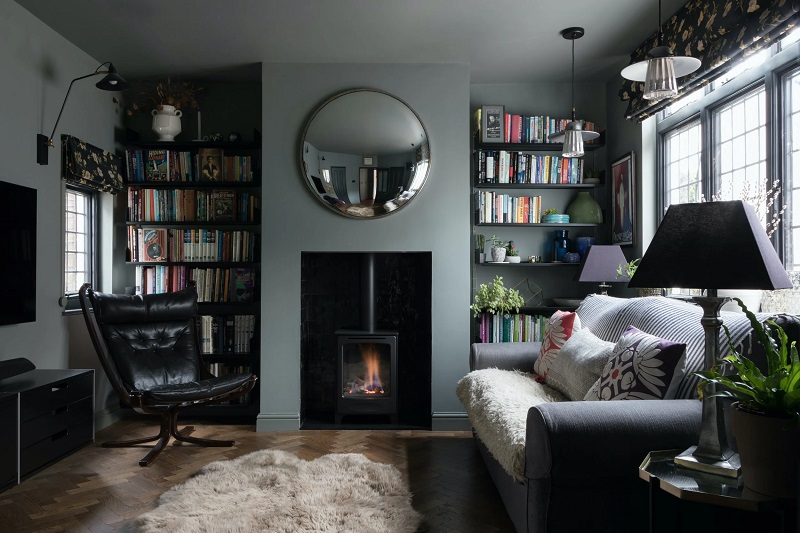

Anyone who has ever tried to decorate a room with windows facing north knows the quiet frustration it brings. You see an airy, sun-kissed living room in a design magazine, purchase the exact same pale gray or crisp linen paint, roll it onto your walls, and watch in disappointment as the space transforms into something resembling a concrete bunker. The room feels chilly, the corners seem perpetually shadowed, and the overall mood feels uncomfortably flat.
This happens because northern light has an entirely different physical character than light coming from the south, east, or west. In the Northern Hemisphere, north-facing windows never receive direct, golden sunlight. Instead, they capture indirect daylight bounced from the open sky. That light is remarkably steady and free from harsh glare—which is why classical painters historically preferred north-facing studios—but it carries a distinct, cool blue undertone.
When you treat a north-facing room as if it were bathed in warm afternoon sun, the design invariably clashes with the light. Making the room feel inviting requires leaning into its natural stillness while deliberately infusing warmth through undertones, dynamic artificial lighting, and tactile materials.
The Problem with Brilliant Whites and Cool Grays
The most common design mistake in a dim room is applying pure white paint under the assumption that white equals brightness. White pigment does not generate light; it merely reflects whatever light is already present in the space.
When cool, blue-tinted northern daylight hits stark white or gray surfaces, those surfaces have no warmth to bounce back. The blue light drains the life from neutral pigments, turning clean whites into dull, shadowy grays that look dingy and clinical. Cool grays, taupes with violet bases, and blues only amplify this effect, making the space feel drafty and ungrounded even when the thermostat is set comfortably high.
To create warmth, you must work in harmony with the incoming light rather than fight it. That means prioritizing colors formulated with yellow, red, peach, or ochre undertones that actively neutralize the cool wash coming through the windows.
Strategic Paint Choices: Warm Neutrals Versus Enveloping Drama
When choosing paint for a north-facing room, you generally have two successful paths forward: lift the room with luminous warm neutrals, or embrace the shadows with deep, saturated pigments.
If your goal is a light, airy ambiance, look for creamy off-whites, pale bisques, warm greiges with yellow bases, and soft muted ivories. These shades contain enough chromatic warmth to counteract the chilly northern skylight, reading on the wall as balanced, comforting neutrals rather than stark clinic walls. Pale terracotta, parched clay, and warm linen tones also work wonders, bringing a gentle sunlit quality to spaces that otherwise receive none.
The alternative approach—and often the most striking—is to lean directly into the room’s moody character. Instead of forcing a dim space to appear sun-drenched, envelop it in rich, grounding colors. Deep moss greens, burnt ochres, warm chocolates, and dusty terracottas thrive in soft, indirect light. Because northern light does not wash surfaces out with blinding glare, dark shades maintain their depth and complexity throughout the day, creating a cozy, jewel-box sanctuary.
Sheen and the Behavior of Diffuse Light
Pay close attention to your paint finish. High-gloss finishes are often recommended for dark rooms to bounce light, but in a north-facing space, high gloss can create cold, mirror-like glares that accentuate the room’s chill.
Instead, opt for matte, eggshell, or chalky mineral finishes. A velvety matte surface softens incoming diffuse light, dispersing it gently across the wall and creating an intimate, wrapped feeling that gloss can never achieve.
Engineering Warmth with Artificial Lighting
Because northern daylight remains relatively uniform from dawn to dusk, north-facing rooms often lack visual hierarchy. Without direct sunlight casting natural angles and shadows, a room can feel two-dimensional. Thoughtfully layered artificial lighting restores that missing dimension.
First, check the color temperature of your light bulbs. Cool white or “daylight” bulbs calibrated at 4000K to 5000K mimic bright midday light, but inside a north-facing domestic interior, they compound the bluish cast and make the room feel like an operating suite. Standardize your lighting on bulbs rated at 2700K with a high Color Rendering Index (CRI 90+). This temperature provides an amber-gold radiance that immediately warms the room’s perimeter.
Next, eliminate the reliance on a single overhead fixture. Ceiling cans or central flush mounts cast harsh downward cones of illumination, leaving room corners in murky obscurity. Build a layered lighting plan instead:
- Place eye-level table lamps on sideboards and consoles to create soft, localized pools of warmth.
- Position an uplight or tall floor lamp in the darkest corner to visually push the room boundaries outward.
- Install picture lights or wall sconces to wash light down vertical surfaces, highlighting art and textured wall treatments.
- Put every fixture on a dimmer switch, giving you precise control over light levels as natural daylight recedes.
Introducing Tactile Depth and Organic Materials
Warmth is an emotional and sensory experience that goes well beyond visual color temperature. The tactile nature of your furnishings plays a decisive role in whether a space feels welcoming or sterile.
Cold materials like polished chrome, glass, acrylic, and unsealed concrete amplify the coolness of northern exposures. Counterbalance these with materials that carry visual weight and natural heat.
Wood tones are particularly effective. Swap out bleached ash or gray-washed timber in favor of medium to deep woods with honey, amber, and red undertones. Walnut, natural cherry, warm teak, and golden oak ground a space, introducing rich organic grain that absorbs and softens the cool ambient daylight.
Textiles should be layered generously throughout the room:
- Ground seating areas with thick, plush wool rugs, textured jute, or layered flatweaves to insulate cold floors.
- Incorporate upholstery in tactile fabrics like velvet, bouclé, corduroy, or heavy washed linen rather than smooth synthetics.
- Hang full-length drapery mounted high and wide outside the window trim. Using warm velvet, heavy cotton, or lined linen drapery frames the window softly and prevents cold glass panes from radiating visual chill into the living space.
Reflective Accents and Warm Metallic Finishes
Reflective surfaces are valuable in dim spaces, but the placement and material must be chosen carefully. Avoid positioning a massive mirror directly opposite a north-facing window; doing so will simply bounce cold sky light right back into the living area. Instead, hang mirrors perpendicular to the window wall or adjacent to lamps where they can capture angled light and warm interior fixtures.
When selecting hardware, curtain rods, and decorative objects, prioritize warm metals over cool ones. Polished nickel, chrome, and stainless steel feel industrial and sharp against cool lighting. Swap them for unlacquered brass, antique bronze, or brushed copper. These living finishes carry natural yellow and reddish undertones, acting as subtle light catchers that gleam softly against matte walls.
Celebrating the Quiet Nature of the Space
Ultimately, making a north-facing room feel warm is an exercise in intentional calibration. Attempting to disguise a north-facing room as a sun-drenched southern conservatory will always feel artificial, but treating its unique light with sensitivity yields spaces of extraordinary comfort.
By neutralizing cool sky light with warm undertones, layering 2700K illumination across varied heights, and surrounding yourself with tactile, rich materials, you transform an uninviting room into a peaceful, deeply comforting retreat that you never want to leave.