
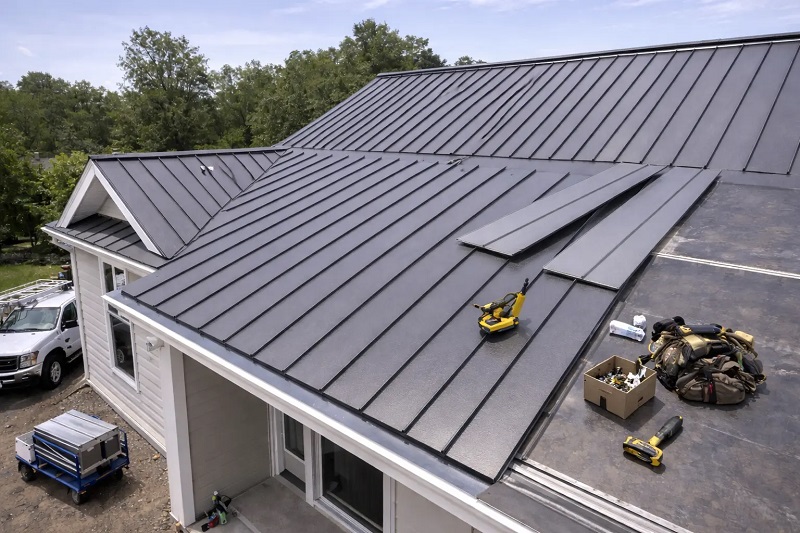

When an asphalt shingle roof reaches the end of its serviceable life, homeowners are frequently pitched a long-term alternative: the standing seam metal roof. The marketing narrative is seductive. With concealed fasteners, clean architectural lines, and an estimated lifespan exceeding fifty years, it promises to be the last roof you will ever purchase.
Yet, many property owners experience severe sticker shock when moving from initial curiosity to written estimates. A standing seam system often costs two to three times more than standard architectural shingles. While the raw material price accounts for a share of that gap, the true drivers are the structural revisions, specialized craft demands, and accessory adjustments lurking just beneath the surface. Understanding these ancillary expenses before signing a contract is the only way to safeguard your remodeling budget.
Substrate Perfection and Decking Demands
Standard asphalt shingles are exceptionally forgiving. Thanks to their flexible composition and granular texture, shingles readily mask minor sags, slight undulations, and uneven gaps across old plywood decking. Standing seam metal offers no such grace.
Because steel and aluminum panels are smooth, rigid, and reflective, any structural flaw underneath telegraphs directly through the metal surface, an aesthetic disaster known in the trade as oil canning. If your home was framed decades ago, the roof deck likely features warped plywood, uneven rafter spans, or gaps wider than a quarter of an inch.
To achieve the flat plane required for standing seam:
- Tear-offs are non-negotiable: Unlike agricultural corrugated panels, standing seam cannot be laid over old asphalt shingles. A complete, down-to-the-deck tear-off is mandatory, carrying significant labor and disposal fees.
- Deck replacement is frequent: Contractors routinely find that thin, delaminated, or uneven decking boards must be ripped out and replaced with smooth, thick CDX plywood or oriented strand board to support panel clip fasteners properly.
- High-temperature underlayment is essential: Metal conducts heat rapidly. Standard organic felt paper will bake, stick to the underside of the panel, and deteriorate within years. Contractors must install premium, self-adhering, high-temperature synthetic underlayment across the entire deck, which commands a steep premium over standard felt.
Specialized Labor and Custom Metal Fabrication
Anyone with basic carpentry familiarity and a pneumatic nail gun can theoretically install a dimensional asphalt roof with reasonable competence. Standing seam metal is an entirely different trade that blends roofing with architectural tinsmithing.
True standing seam systems rely on concealed clips and mechanical seams that fold together to allow for continuous thermal expansion and contraction. Metal panels expand during blistering summer afternoons and contract during freezing winter nights. If an installer drives fasteners directly through the panel face or pins the metal at the eaves and ridge incorrectly, the panels will buckle, distort, and eventually shear the screws.
Because this trade requires specialized training, specialized roll-forming machinery, and expensive hand-seaming tools, the labor pool is dramatically smaller than that of standard shingle crews. You are not paying for manual labor; you are paying for mechanical precision and artisanal trade knowledge, which inflates the labor portion of your invoice considerably.
Intricate Flashings, Valleys, and Roof Penetrations
A complex roofline filled with dormers, intersecting hips, skylights, and masonry chimneys will escalate the cost of a standing seam project exponentially.
With asphalt shingles, flashing around a pipe boot or a chimney involves cutting flexible step-flashing pieces and integrating them with the shingle tabs using roof mastic. With standing seam metal, every single penetration requires a custom-fabricated sheet metal transition.
Custom Penetration Detailing
Standard rubber pipe boots used on shingle roofs will degrade and fail within a decade, long before the metal roof reaches middle age. Upgrading to a lifetime metal roof necessitates high-grade silicone or lead boots custom-crimped to the panel seams.
Valley and Ridge Engineering
Valleys must be designed with two-piece sliding systems or double-folded locking seams to channel gallons of torrential rain without exposing fasteners to standing water. The ridge caps must be folded by hand or secured through custom vented closures. Each additional valley, skylight, or vent pipe can add hundreds of dollars in custom metal smithing fees alone.
Winter Accessories: The Snow Guard Requirement
Homeowners living in northern climates often overlook the physics of how snow behaves on smooth metal. Asphalt shingles feature a rough, gritty surface that holds a blanket of heavy snow in place while it gradually melts. Standing seam panels, by contrast, offer almost zero friction.
When ambient temperatures rise slightly, entire sheets of accumulated snow and ice can slide off the slick metal surface simultaneously in a catastrophic event known as a roof avalanche.
This uncontrolled sliding snow can rip expensive seamless gutters directly off the fascia, crush air conditioning condenser units, destroy manicured foundation plantings, and present an imminent physical hazard to anyone standing on walkways below. To prevent this, you must invest in heavy-duty, clamp-on snow retention systems. High-end snow guards engineered for standing seam attach to the vertical ribs with specialized brass or stainless-steel clamps, preserving the integrity of the hidden fastener system while adding several thousand dollars to the project total.
Matching the Investment to Your Homeownership Horizon
Upgrading to a standing seam metal roof is one of the most durable, architecturally striking investments you can make for your home exterior. It stands up to punishing windstorms, sheds torrential precipitation, resists embers from wildfires, and eliminates the regular fifteen-year cycle of replacing asphalt shingles.
However, treating it as a simple material exchange ignores the rigorous substrate prep, meticulous custom tinsmithing, and specialized accessories required to make it perform. By calculating the total cost of ownership—including high-temp underlayment, deck reconstruction, custom transitions, and climate protections—you can make an informed, realistic financial decision rather than finding yourself ambushed by change orders on installation day.