
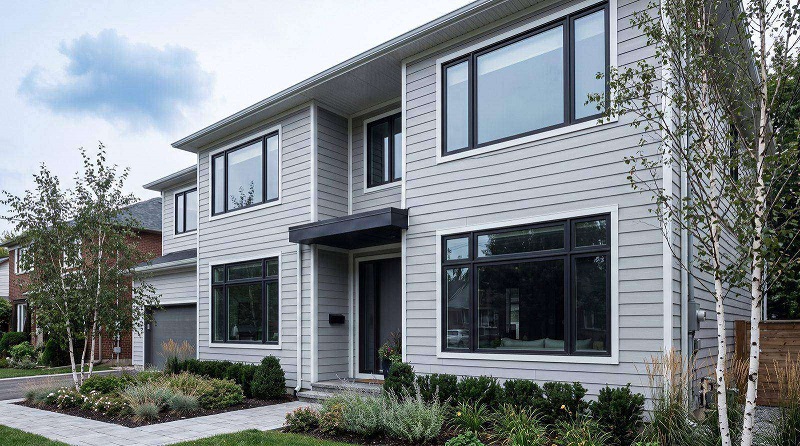

Few exterior design elements have captured contemporary residential architecture quite like black window frames. From sprawling modern farmhouses and urban infill townhomes to minimalist desert retreats, dark sashes and casings have become the default choice for homeowners seeking visual weight, sharp contrast, and an industrial-inspired edge. Black windows frame outdoor views like artwork and give a crisp, tailored outline to almost any facade material, whether it is natural cedar, whitewashed brick, or dark standing-seam metal.
Yet underneath this compelling visual identity lies an unavoidable reality of physics: dark colors absorb solar radiation, while light colors reflect it. In the controlled environment of an architect’s rendering or an interior design studio, color is purely aesthetic. Out in the elements, exposed to decades of blazing solar heat, fluctuating seasons, and relentless ultraviolet radiation, color becomes a structural and chemical factor.
Before committing to black exterior windows, builders and property owners need a clear understanding of the thermodynamic stresses, material vulnerabilities, and chemical degradation pathways that dark finishes introduce.
The Physics of Solar Absorption and Surface Heat
The fundamental issue with dark exterior frames comes down to the solar spectrum. Sunlight delivers energy across ultraviolet, visible, and infrared wavelengths. Standard white or off-white window frames reflect the majority of this energy back into the atmosphere, keeping surface temperatures relatively close to ambient outdoor air temperatures.
Black surfaces behave in the exact opposite manner, absorbing up to ninety percent of visible light alongside significant amounts of infrared radiation. On a cloudless summer day with ambient temperatures hovering around 85°F, a standard white vinyl window frame might warm up to 95°F or 100°F. Under the identical solar load, a black exterior frame can easily reach 140°F to 170°F. If the window faces directly south or west with zero shade, surface temperatures can climb even higher.
This intense heat buildup does not stay localized to the outer coat of paint or cladding. It radiates inward, raising the temperature of the frame core, stressing the surrounding weatherstripping, and warming the perimeter of the insulated glass unit.
Material Realities: How Frames Handle Thermal Stress
The way a window assembly responds to high surface temperatures depends almost entirely on what the frame is made of. The market offers black windows across several distinct price tiers, and cutting costs on material selection often leads to premature mechanical failure.
Vinyl and the Low-Cost Dilemma
Standard unplasticized polyvinyl chloride (uPVC) is an economical, low-maintenance material that performs adequately in light, reflective colors. When manufactured in or painted black, however, it faces serious physical limitations.
Vinyl has a relatively high rate of thermal expansion paired with a low heat distortion temperature. When subjected to surface temperatures north of 140°F, standard vinyl softens, loses structural rigidity, and expands rapidly. As the sun sets and temperatures drop, the material contracts.
This relentless expansion-contraction cycle can cause thermal warping, sash sagging, and oil-canning (a wavy, distorted surface appearance). Over several seasons, warped sashes can bind within their tracks, making windows difficult or impossible to open and close smoothly. Gaps can open at corner welds and weatherstripping, introducing air drafts and water leaks into the wall cavity. While some manufacturers utilize interior aluminum reinforcement or acrylic capstocks formulated with heat-reflective pigments to mitigate this issue, basic painted black vinyl remains vulnerable in warm, sunny climates.
Fiberglass and Composites
Fiberglass frames represent a significant step up in thermal stability. Composed of pultruded glass fibers embedded in thermoset resin, fiberglass expands and contracts at nearly the same rate as the glass panes it holds. It does not soften under extreme ambient heat, nor does it turn brittle during freezing winter nights. For black exteriors, fiberglass provides the structural muscle necessary to resist warping, racking, and distortion, even on unshaded southwestern exposures.
Thermally Broken Aluminum
Architectural aluminum offers exceptional strength, crisp sightlines, and zero risk of warping or melting under the sun. However, aluminum is an aggressive thermal conductor. A black aluminum frame exposed to direct sun will rapidly pull that exterior heat through the metal and radiate it directly into the home’s interior, driving up cooling loads.
To use black aluminum effectively, the frames must feature robust polyamide thermal breaks. These non-conductive barriers physically isolate the exterior aluminum extrusion from the interior extrusion, preventing thermal bridging and protecting the indoor environment from blistering frame temperatures.
The Threat of UV Degradation and Color Fading
Beyond structural movement caused by heat, black exterior windows face constant chemical bombardment from ultraviolet (UV) light. Over time, high-energy UV photons break down the molecular bonds in organic pigments and binding resins, causing dark finishes to change in appearance.
The primary symptom of this breakdown is fading. Deep, rich matte black can slowly drift into a washed-out charcoal, chalky slate, or bronze tone. Worse still is chalking, a condition where the binding resin degrades, leaving a powdery white residue of loose pigment particles on the surface of the frame.
This weathering is rarely uniform across a house. South- and west-facing windows bear the brunt of afternoon sun and intense thermal swings, while north-facing windows remain shielded in indirect light. Within five to eight years, an improperly finished home can exhibit noticeably mismatched window colors, with the street-facing front facade looking faded and weathered while the sheltered sides retain their original saturation.
The Critical Role of Finish Chemistry
To survive decades in the sun, a black window must rely on advanced industrial coating technology rather than conventional exterior paint.
Entry-level finishes often rely on standard liquid paints or thin capstock layers that struggle under sustained UV exposure. Superior longevity requires factory-applied coatings built with inorganic ceramic pigments and fluoropolymer resins, such as polyvinylidene fluoride (PVDF). High-performance finishes meet strict architectural standards requiring thousands of hours of continuous exposure testing without significant color shifting or chalking.
Furthermore, premium manufacturers now incorporate “cool pigment” technology. These specially formulated dark pigments appear visually black to the human eye because they absorb visible light, but they are engineered to reflect near-infrared radiation. By reflecting the invisible heat-generating wavelengths of sunlight, cool pigments can lower the peak surface temperature of a black frame by 15°F to 20°F, substantially reducing thermal stress on the underlying substrate.
Impact on Insulated Glass Units
The thermal penalty of dark window frames extends directly to the glass itself. Modern windows rely on Insulated Glass Units (IGUs), which consist of two or three panes of glass separated by a spacer bar and sealed with structural adhesives like polyisobutylene and silicone. The space between the panes is filled with inert argon or krypton gas to slow heat transfer.
When a black frame absorbs heat, the edge of the glass unit heats up rapidly while the center of the pane remains cooler. This creates a steep thermal gradient across the glass pane, resulting in thermal stress fractures if the glass is not heat-strengthened or tempered.
Simultaneously, extreme perimeter temperatures soften the primary and secondary sealants of the IGU. As the frame expands and contracts daily, it exerts mechanical shear forces on these softened seals. Over time, the seals can fail prematurely, allowing the insulating argon gas to leak out and moist atmospheric air to enter. Once moisture penetrates the unit, internal condensation forms between the panes, creating a permanent, milky haze that cannot be cleaned and necessitates complete glass replacement.
Smart Design Strategies and Buyer Considerations
Choosing black windows does not have to mean accepting early failure. It simply requires matching the product’s engineering to the specific environmental realities of the build site.
- Account for orientation: Reserve black frames for elevations with adequate natural protection, or specify higher-tier materials for the punishing southern and western exposures.
- Integrate architectural shading: Deep roof eaves, second-story cantilevers, covered porches, and external louvers shield window heads from high summer sun, dropping frame temperatures dramatically without sacrificing winter light.
- Prioritize dimensional stability: In sun-drenched southern and western states, avoid basic black vinyl entirely. Invest in fiberglass, composite frames, or commercially rated, thermally broken aluminum.
- Verify coating certifications: Look for window lines finished with high-durability fluoropolymer coatings or advanced architectural powder coatings that carry comprehensive color retention guarantees.
- Read the warranty fine print: Many window warranties contain strict exclusions for dark exterior colors, limiting coverage for thermal distortion, fading, or seal failure if the units are installed on specific exposures or in regions with high solar radiation.
Black exterior windows remain a powerful design tool, offering an undeniable sense of architectural refinement and visual discipline. However, their beauty relies on an unyielding relationship with the climate. Homeowners and designers who respect the thermal reality of dark surfaces—investing in stable substrates, superior coatings, and smart architectural shading—will enjoy crisp, striking sightlines for decades. Those who treat black frames as a cosmetic swap on builder-grade components will find that the sun always collects its due.